With the individual components validated, the next challenge was the one that decides whether a flight is a success or an expensive balloon release: establishing a link that survives distance, motion and interference.
From April to May 2025 we put serious effort into LoRa testing and enhancement. LoRa — Long Range — is central to the system because it moves telemetry over tens of kilometres on a power budget a battery can actually sustain for a whole flight.
The range campaign
Range testing is unglamorous work. You drive, you stop, you log, you drive further. What it gives you is honest data on where the link degrades and, more importantly, why — antenna orientation, terrain, or an encoding scheme that isn't as robust as the datasheet implies.
- Packet structure tightened so a corrupted byte costs one field, not a whole frame.
- Encoding and decoding refined until dropped packets became recoverable.
- Antenna placement characterised against the payload structure rather than in free space.
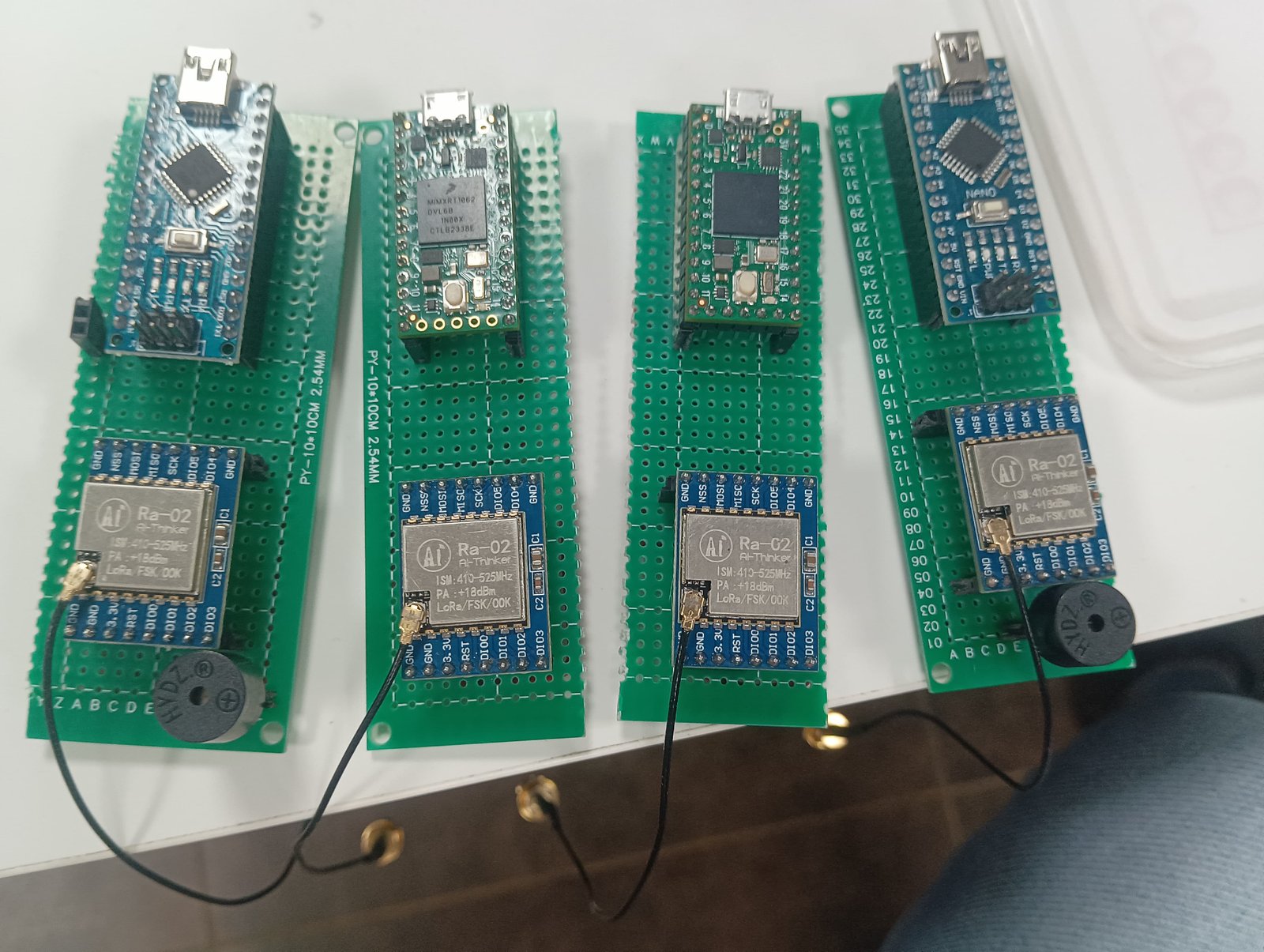
First full system integration
By the end of May 2025 we reached a pivotal moment: final testing on a breadboard with every component attached. This was the first true system-integration test, where each sensor, the communication module and the processing unit all had to work together rather than take turns.
Seeing the whole thing function as a single cohesive unit — sensors sampling, packets forming, the ground station printing real values — was the moment the project stopped being a collection of parts.
| Link parameter | Result |
|---|---|
| Primary downlink | LoRa |
| Redundant path | GSM |
| Reported metrics | RSSI · SNR |
| Integration status | All subsystems live |
With the link proven and the system integrated, the prototype had earned the right to become hardware.