It all started in December 2024, when the team came together brimming with ideas for a satellite monitoring system. That first phase was about solidifying the vision, defining what the project was actually for, and laying groundwork solid enough to build on.
The question we kept returning to was deceptively simple: how cheaply can a student team put a genuinely useful atmospheric instrument above the weather — and get the data back? Everything downstream, every component choice and every argument about tolerances, traces back to that.
Building the bill of materials
By January 2025 we had shifted into the nitty-gritty of component selection and the Phase 1 bill of materials. This was the critical step: every part, from microcontroller to sensor, had to integrate cleanly and perform under conditions we couldn't fully rehearse on the ground. We researched methodically and chose for reliability and efficiency rather than spec-sheet glamour.
| Subsystem | Phase 1 selection |
|---|---|
| Flight computer | Microcontroller, low-power |
| Pressure / altitude | Barometric sensor |
| Temperature & humidity | Dual-channel |
| Attitude | 6-axis IMU |
| Air quality | Gas sensor |
| Downlink | LoRa + GSM |
The components arrive
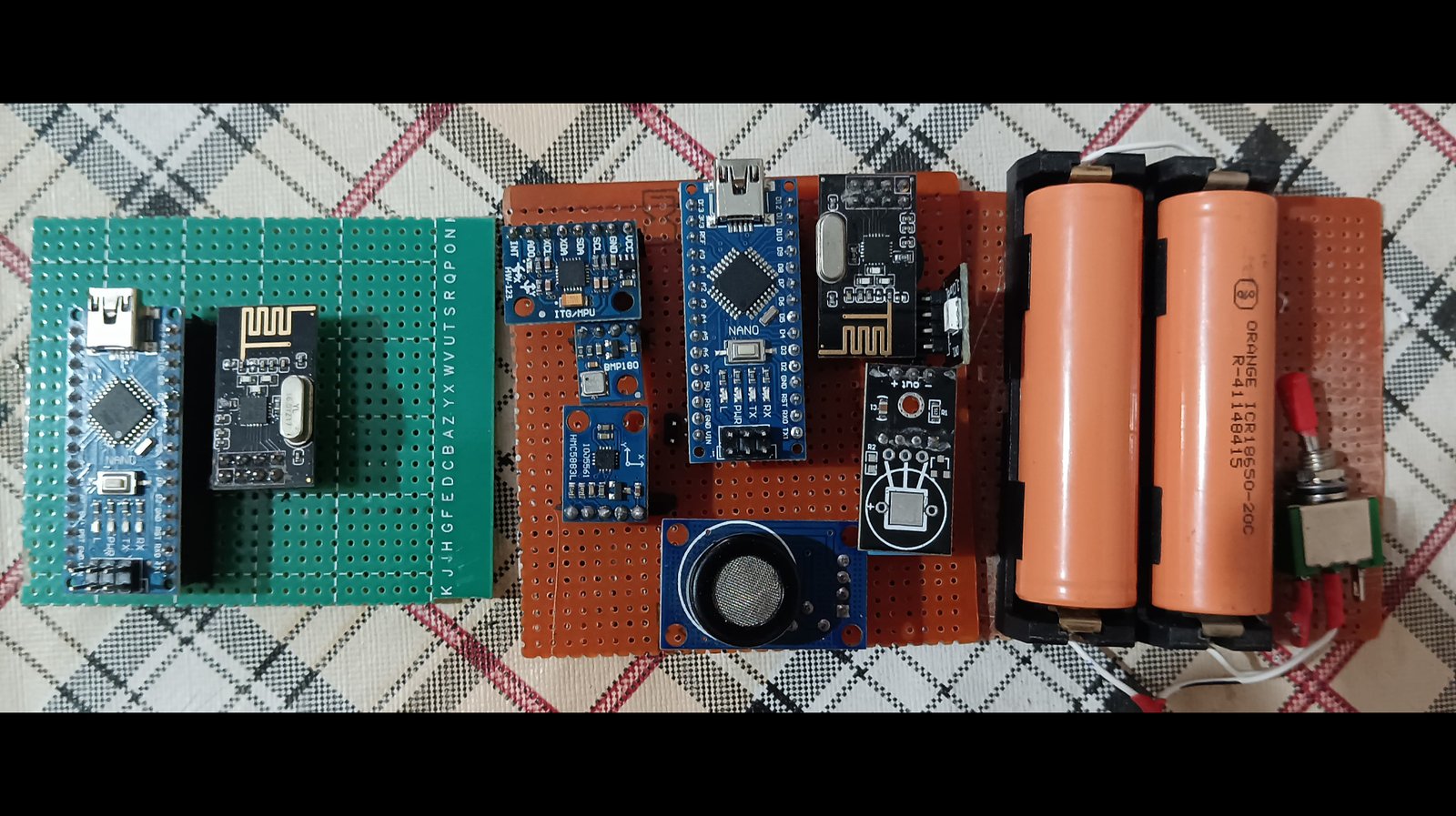
The excitement genuinely ramped up when the Phase 1 components arrived in March 2025. Unboxing them felt like opening a treasure chest — each part brought us measurably closer to turning a set of ideas into a tangible system.
Validating every part on the bench
Through March and April 2025 the lab was a hub of activity as we tested each component and sensor in isolation. This wasn't a formality. Validating functionality before integration is what stops a single bad part from turning into a week of chasing ghosts in a fully assembled system.
- Each sensor characterised against a known reference before it was trusted.
- Power draw measured per subsystem, so the flight budget was real rather than estimated.
- Failure modes documented — what a part does when it is almost working.
With every part individually proven, the next problem was the one that would define the rest of the programme: getting the data down.